

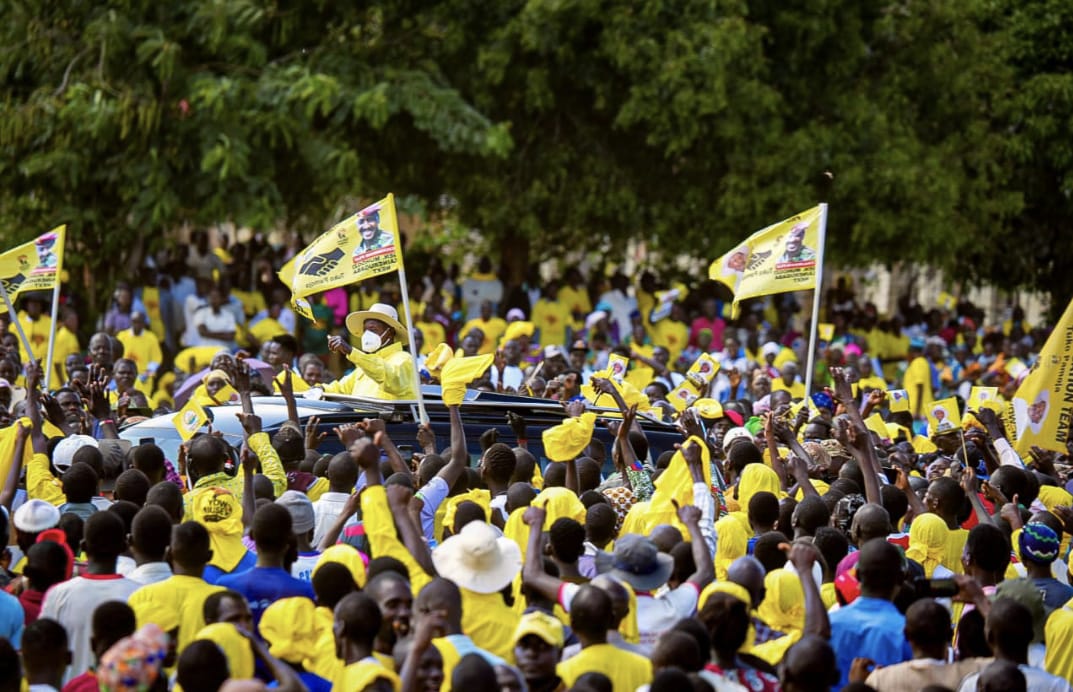
President Museveni has urged residents of Kumi District to prioritize personal wealth creation instead of celebrating government infrastructure projects, saying prosperity will only come through individual productivity and economic engagement.
Speaking on Tuesday at Kumi Wiggins Secondary School grounds during a campaign rally, Museveni said the National Resistance Movement (NRM) government has fulfilled its duty by providing roads, electricity, and water, but citizens must use these resources to improve their own livelihoods.
“The roads are for everyone; even me as a visitor in Kumi, I’m using them,” the President said. “But wealth or poverty is personal. That’s why the NRM government insists on wealth creation to uplift people’s lives.”
He cautioned that citizens who fail to engage in productive ventures become a burden to the nation, as they neither generate income nor contribute taxes needed to sustain public services.
Using the Ateso term akalanyanut, he described unproductive people as “lazy individuals who stand idle while others are busy working.”
Museveni reaffirmed government’s commitment to the rehabilitation and restocking program for the Lango, Teso, and Acholi subregions, under which every household will receive five cows.
The initiative, he said, is intended to help families recover from the loss of cattle during past insurgencies and rebuild livelihoods through livestock-based income generation.
In response to local concerns, the President pledged to extend electricity to ten subcounties in Kumi District that remain off the national grid.
He also expressed concern over Kumi’s low clean water coverage, currently at 47 percent, compared to neighboring Ngora District’s 90 percent. Only 153 of Kumi’s 325 villages have boreholes.
To address the water shortage, Museveni announced plans to pump water from Lake Kyoga to higher ground so that it can flow by gravity throughout Teso, taking advantage of the region’s flat terrain.
On education, he reiterated his stance against illegal fees in government schools, insisting that Universal Primary Education (UPE) must remain free.
“I believe in free education; that’s why we introduced UPE,” he said. “But some people started charging extra money. I’ve even started demonstration projects with free skilling hubs, one in Teso, where youth learn practical skills at no cost.”
Museveni cited success stories of youth who dropped out of school but are now manufacturing goods previously imported from abroad, thanks to government skilling initiatives.
He also reiterated government’s plan to ensure every parish has a government primary school and every subcounty a government secondary school.
Kumi, he noted, currently has 75 government primary schools in rural areas and 25 in the municipality.
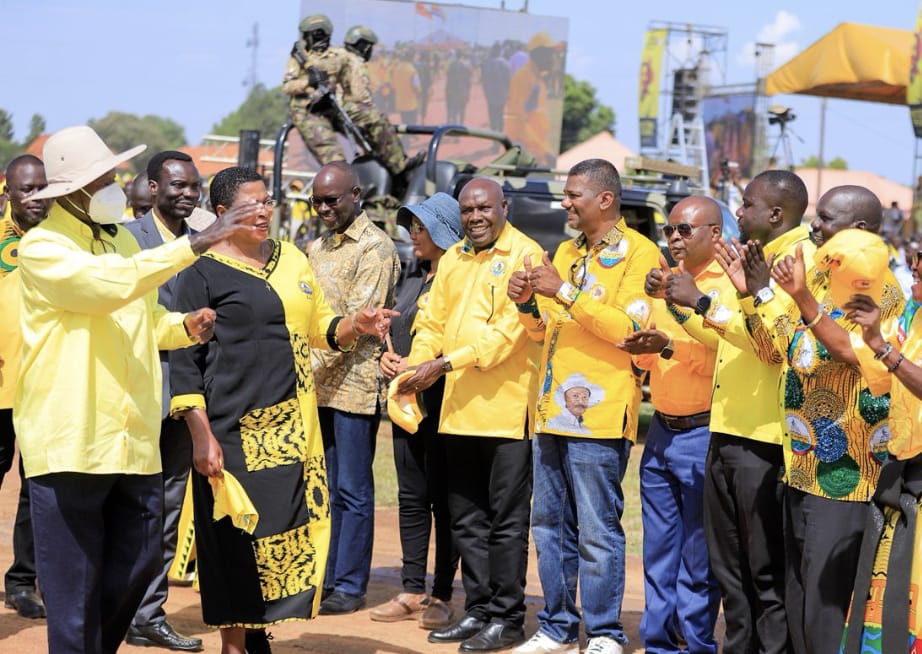
In the health sector, Museveni pledged to upgrade several Health Centre IIs to Health Centre IIIs and to construct new facilities in Kanapa, Kanyumu, and Mukongoro.
He challenged Kumi leaders to allocate more land for industrial development, noting that the 97 acres currently available are insufficient.
“We need at least a square mile of land,” he said, citing the Mbale Industrial Park as an example of how industrial investment can spur economic growth and job creation.
Concluding his address, Museveni urged residents to shift their mindset from dependence to productivity.
“Let’s not just admire the tarmac roads,” he said. “Let’s use them to take our goods to the market and create wealth for our families.”
